Sustainability in foodservice is easy to claim. Proving it is harder. For distributors operating across complex supply chains and multiple markets, the gap between intention and action is where credibility is won or lost.
Plate of Purpose is Chef Middle East's commitment for closing that gap. And in 2026, that reaches a significant milestone: Chef Middle East is joining the United Nations Global Compact, committing to globally recognised principles on human rights, labour, environment, and ethical business practices. As World Environment Day gives the industry a moment to reflect on where it stands, this is a practical look at what the programme stands for, what it has delivered, and what it asks of everyone involved
From Policy to Practice
Plate of Purpose was not designed as a communications exercise. It is a commitment that runs across how Chef Middle East sources, operates, hires, and partners across the UAE, Qatar, and Oman.
The framework is built around five pillars: collective action, supply chain resilience, our people, business ethics, and environmental footprint. Each connects to measurable targets, internal policies, and third-party verification.
As Joanie Dall'anese, Head of Marketing at Chef Middle East, puts it: "Plate of Purpose is more than a programme. It is a promise. It asks Chef Middle East to evolve from a traditional distributor into a responsible ecosystem partner for the industry. Plate of Purpose was built to shift the mindset from sustainability as compliance to sustainability as culture, and that means extending accountability across every department, not just one team."
That accountability has produced tangible results in 2025:.
The numbers reflect a programme held to account, not just communicated. And in 2026, the bar rises further.
Chef Middle East joins the United Nations Global Compact, committing to globally recognised principles on human rights, labour, environment, and ethical business practices. It is the next formal step in a progression the programme has been building toward. The targets behind that commitment are equally concrete.
To read more about our commitments, explore the full 2025 Sustainability Report here.
Independently Verified
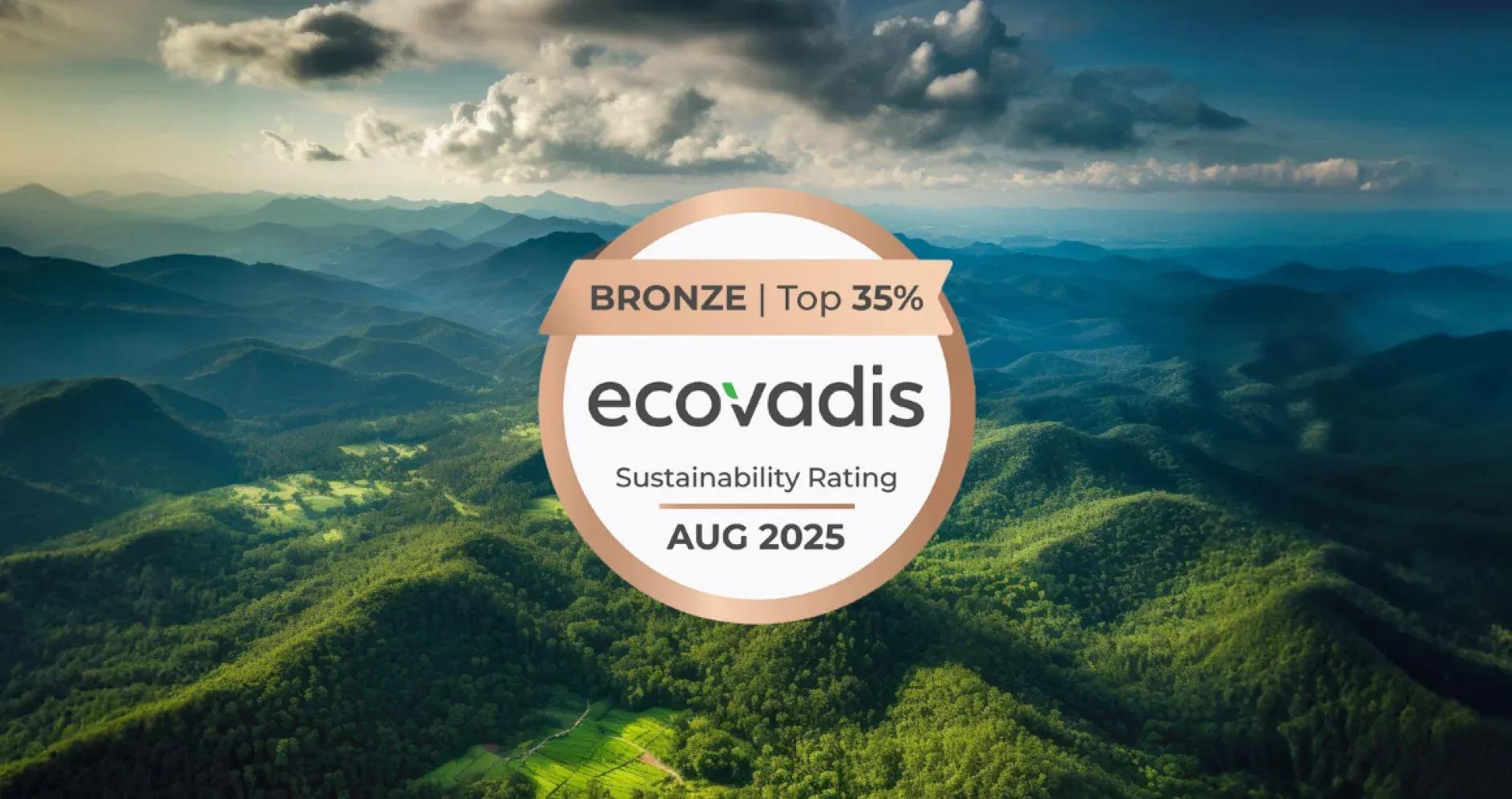
Third-party verification is what separates a sustainability claim from a standard. EcoVadis, a global platform used by companies worldwide to assess responsible and sustainable business practices across environmental impact, labour and human rights, ethics, and responsible sourcing, provides exactly that. Chef Middle East was awarded the EcoVadis Bronze Medal for the second consecutive year, with a score of 68/100, up from 58 the previous year, placing Chef Middle East among the top 35% of organisations globally assessed for sustainability management.
The recognition matters precisely because it is externally validated. It reflects how the business performs against globally recognised standards, covering operations, supply chain, and governance.
The Standard Behind the Supply Chain
Sustainability only travels as far as the supply chain allows. For Chef Middle East, that means holding its suppliers to the same standards it holds itself. By 2027, the target is for 60% of suppliers by spend to undergo ESG screening and factory audits — a structured process that assesses how each supplier manages their environmental impact, labour practices, and ethical standards. It is how Chef Middle East ensures its commitments do not stop at the warehouse door but extend back through every producer relationship in the network.
Chef Middle East completed its first carbon baselining exercise in 2024, enabling more targeted action in 2025. The results across energy, emissions, and operations tell a consistent story.
These are operational decisions built into how Chef Middle East runs, not standalone green initiatives.
Supply Chain Responsibility
Sourcing is where foodservice sustainability becomes concrete or falls apart. For Chef Middle East, it means applying standards across a portfolio that spans hundreds of suppliers and thousands of products.
ESG screening and factory audits are targeted for 60% of suppliers by spend by 2027, using a combination of self-assessment questionnaires, document review, risk classification, and on-site audits led by the QA team.
For supplier partners who share the same priorities, the relationship carries particular weight. Garrett Nixon, CSR Manager at Les vergers Boiron, a B Corp certified producer committed to organic and sustainably sourced ingredients, describes what aligning with Chef Middle East means in practice:
"First and foremost, because we share a common vision of sustainability challenges. Our roadmaps are aligned and pursue consistent objectives in terms of climate action, responsible sourcing, product quality, as well as team wellbeing and engagement. This alignment of priorities enables us to move in the same direction and build concrete long-term actions together. We also share the belief that sustainability challenges cannot be addressed alone. Mobilising our entire ecosystem is essential to creating real and lasting impact."
For Nixon, the foundation of that shared work comes down to something more fundamental: "Our relationship is built on strong human values. It is grounded in trust and transparency, which form an essential foundation for building a long-term partnership that combines performance with positive impact."
Community and the Kitchen
Plate of Purpose extends beyond internal operations. In 2025, Chef Middle East donated 16,346 kg of ingredients through partnerships with the UAE Food Bank, Oman Food Bank, and Wa'hab in Qatar.
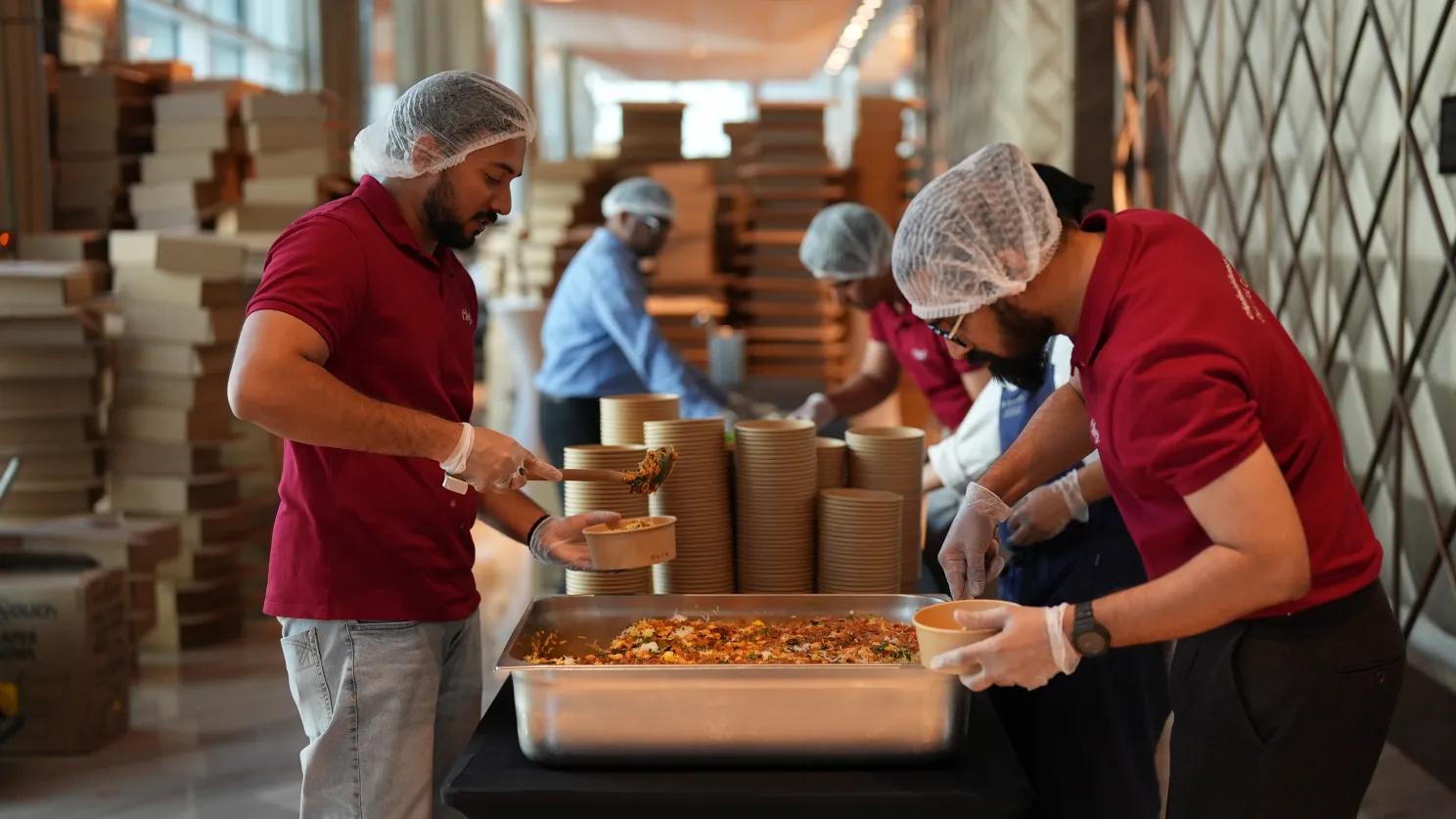
This year's Ramadan initiative brought that commitment to life across three markets. Working with Sofitel Dubai The Obelisk, Mandarin Oriental Doha, and Hilton Garden Inn Muscat, Chef Middle East's own volunteers prepared and distributed over 1,800 meals, reinforcing what responsible foodservice looks like when it reaches the community.
Russell Impiazzi, Executive Chef at Sofitel Dubai The Obelisk, put it plainly: "We have the ability to do the right thing. Reducing food waste at every opportunity is first and foremost. Give it away, don't throw it away."
That conviction carried across the region. In Doha, Rohit Nair, Senior Chef de Cuisine at Mandarin Oriental Doha, reflected on what participation meant: "During the Holy Month of Ramadan, it becomes even more meaningful for us as chefs to give back to society. Being part of this collaboration with Chef Middle East and Wa'hab to prepare and pack 500 meal boxes is something we are truly honoured to support."
A Promise, Not a Policy
The commitment behind Plate of Purpose does not sit in a document. It sits with the team members who completed Climate Fresk training, the volunteers who packed meals during Ramadan, and the procurement teams holding suppliers to a standard the business itself is measured against every year.
The work is already well underway in every sourcing decision, every supplier relationship, and every delivery.
That is what turning sustainability from a policy into a culture actually looks like.
To understand more about what Plate of Purpose stands for, and what it means for the suppliers and operators who are part of it, explore our programme at chefmiddleeast.com/about-us/plate-of-purpose.