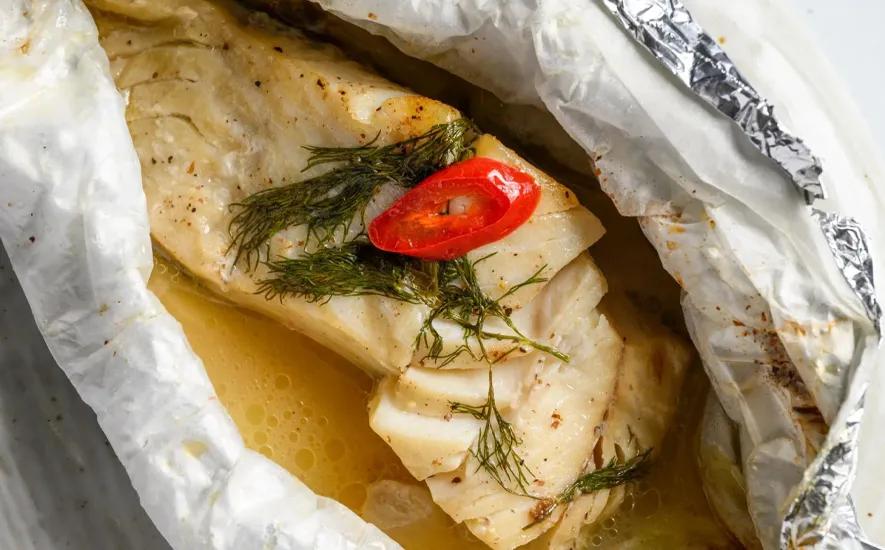
Seafood remains one of the clearest tests of trust on a menu. Diners may not see what happens before the pass, yet they notice freshness, texture, sizing, and value quickly. For chefs and operators, the priority has shifted from simply sourcing seafood to ensuring every item arrives prepared, controlled, and service-ready.
A minor change in trimming, temperature, portion size, handling, or packing can affect food cost, shelf life, labour, and guest perception. The strongest seafood programmes are built before the product reaches the kitchen, with careful preparation, clear specifications, and reliable supply processes.
From receiving and inspection to chilled storage, filleting, portioning, custom cuts, packing, labelling, and dispatch, the operation is designed around the way restaurants can plan, costs, and serve seafood.
This is an operational hub built to reduce uncertainty before the shipment reaches the kitchen. Chef Middle East’s Seafood Facility receives more than 20 fish shipments per week, even during the off-season. Our processing capacity reaches 25 tonnes per day, supporting daily demand and larger requirements across hotels, restaurants, catering, and multi-site groups.
Mathews Philip, Seafood Category Manager, Chef Middle East, says, “Receiving is one of the main areas where we take extra care, as most products arrive from outside the country after hours of travel from their origin. Any fluctuation in temperature directly impacts quality.”
After inspection, the received stock moves into raw material storage before being prepared according to daily requirements. The team prepares fish into cleaned formats, tailored cuts, based on the kitchen’s specifications. Each item is packed against individual requirements, labelled with the necessary information, and dispatched through a continued cold chain.
“All areas of our facility are kept between 2 and 5 degrees Celsius to maintain quality. Our trucks also keep chiller temperature to continue the cold chain,” Philip adds.
The facility is supported by blast freezing, vacuum machines, and metal detection. These systems help protect freshness, extend usability, support safer handling, and reinforce checks before dispatch.
For professional kitchens, preparation has a direct impact on service readiness. A chef may buy whole fish for skill, presentation, or yield control, while a high-volume kitchen may need exact cuts to keep plate costs stable. A hotel may need varied options to support banqueting, buffet, à la carte, and room service. A delivery-led concept may need dependable frozen products that reduce prep pressure without compromising guest experience.
Service-ready solutions reduce repetitive prep work and support more consistent execution, allowing chefs to focus on the details. This matters because seafood handling requires skill at every stage. Every additional handling step carries risk. Philip points to the expertise behind the process as a key part of the value. “The main criterion for choosing our processing members is their experience in fish handling. This helps us achieve very good yield, and they understand the needs of chefs. Our team never compromises on quality, and customers can consider our facility as their own butchery to reduce their risk in fish handling”, he says.
At Chef Middle East, we go beyond supply, helping customers decide which format best fits the menu, cost structure, guest expectation, and labour model..
Premium dining can draw on oysters, lobster, scallops, caviar, roe, and selected fish cuts. Hotels and banqueting teams can work with whole fish, fillets, shrimp, mussels, and controlled portions. Asian and sushi-led concepts can rely on salmon, tuna, shellfish, and relevant options. Casual dining and delivery operators can benefit from frozen items, calamari, shrimp, and value-added solutions that improve consistency across busy periods.
The ability to supply by piece is also important for cost control. As Philip explains, “Some customers purchase by the piece to reduce waste and manage food cost with greater accuracy.”
Quality control is not a back-end detail in this category. It directly affects food safety, shelf life, texture, guest trust, and commercial performance. Chef Middle East’s facility applies defined standards across every stage of the chain, from supplier selection and batch traceability to production records, temperature discipline, processing, and delivery. “Our facility holds ISO and HACCP certification to monitor quality in every step of processing. We maintain all records to monitor the process at any time,” says Philip.
Traceability adds another layer of control. Each arrival is recorded through an auto-generated batch number, allowing the team to trace it from receipt to final preparation. Chef Middle East regularly undergoes customer audits, allowing its records, processes, and standards to be verified for operators that require strong documentation.
“We maintain and record traceability for every product handled in our facility. Each arrival is assigned an auto-generated batch number, allowing us to track its details from receipt through to the final prepared format,” Philip explains.
For Chef Middle East, sustainability starts with action across sourcing, supplier discussions, yield improvement, and waste reduction.
Philip states, “We prefer to buy from suppliers holding sustainability certifications such as ASC, MSC, and ICCAT where possible. Besides, to reduce waste, we sell usable trimmings and heads and dispose of thermocol boxes through approved recycling partners.”
Seafood remains one of the most demanding categories in foodservice because it connects quality, cost, labour, food safety, sustainability expectations, and guest perception in one decision. The pressure of ensuring freshness, yield, and consistency is high, but the opportunity is significant when the right system sits behind the product.
Chef Middle East reflects a clear shift in the market, where sharper specifications, better preparation, stronger transparency, and efficient execution are becoming essential. For customers and partners, it is not only about access. It is about having a stronger capability behind every purchase, portion, and plate.
Our facility’s scale, certifications, equipment, weekly handling capacity, and cold-chain discipline all point to one message: trust is built through precision, not chance.
The final dish served on the plate is the result of decisions made much earlier, through care, expertise, and process.